
Educational resourceCommunity & Partnerships
Elder Abuse: How to Spot It, Prevent It and Report It
Elder abuse is common and often hidden. Learn the warning signs, how to help prevent it, and how to report suspected abuse in California.
- Published
- Reading time
- 7 min
On this page
Most older adults are cared for by people who love them. But a significant number experience harm from someone they trust: a family member, a paid caregiver or staff in a care setting. Elder abuse is common, underreported and often preventable. Physical therapists, home health clinicians, neighbors, friends and family members are frequently the people best placed to notice that something is wrong.
This article reviews what recent research shows about how common elder abuse is, the warning signs to watch for, practical ways to prevent it, and exactly how to report a concern, including the California resources available to our community.
What counts as elder abuse?
The Centers for Disease Control and Prevention (CDC) describes five main types of abuse of older adults (age 60 and over):
- Physical abuse: hitting, pushing, inappropriate restraint or other use of force that causes injury or pain
- Sexual abuse: any unwanted sexual contact
- Emotional or psychological abuse: threats, humiliation, intimidation, isolation
- Neglect: failure to meet basic needs such as food, hygiene, medication, mobility aids or medical care
- Financial abuse: misuse or theft of money, property or benefits, including pressure to change a will or title
Patient abuse can also occur in hospitals, nursing homes and other care settings, and many of the same warning signs and reporting steps apply. California law also protects “dependent adults,” people ages 18 to 59 whose physical or mental limitations restrict their ability to protect themselves.
What the research found
Elder abuse is more common than most people think
A landmark 2017 meta-analysis in The Lancet Global Health (Yon and colleagues) pooled 52 studies from 28 countries and estimated that about 15.7% of adults age 60 and older living in the community, roughly one in six, had experienced some form of abuse in the past year. Psychological abuse was the most common type reported, followed by financial abuse and neglect.
A larger 2025 systematic review and meta-analysis in BMC Public Health (Kitaw and colleagues) included 94 studies from 35 countries and more than 776,000 older adults. It produced a pooled prevalence of 27.6% for any elder abuse. Psychological abuse (20.9%) and neglect (19.3%) were the most frequent, followed by financial (11.7%), verbal (11.0%), physical (7.9%) and sexual abuse (1.5%). Rates were similar in institutional settings (29.0%) and in the community (27.0%). Estimates vary widely between studies because definitions, survey methods and countries differ, so these numbers should be read as a range rather than a precise figure. In the United States, the CDC estimates that about 1 in 10 older adults living at home experience abuse.
People living with dementia face higher risk
A 2025 meta-analysis in Gerontology (Shen and colleagues) examined 30 studies of people with dementia living in the community and their caregivers. The pooled prevalence of any abuse or neglect was 42.6%, with psychological abuse (44.8%) and financial abuse (28.3%) the most commonly reported. Cognitive impairment can make it harder for a person to recognize abuse, remember it or report it, which is why others around them need to stay alert.
Abuse in care facilities
A 2019 meta-analysis in the European Journal of Public Health (Yon and colleagues) reviewed abuse in institutional settings such as nursing homes. In staff surveys, 64.2% of staff reported committing some form of abuse in the past year, most often psychological. The authors cautioned that the studies varied widely and the estimates are imprecise, but the findings underline why oversight and family involvement matter.
Harm is rising, and it is costly
According to the CDC, rates of nonfatal assault against older adults rose 31% and homicide rates rose 26% between 2015 and 2022, and assault injuries in older adults were associated with an estimated $33 billion in costs in 2022.
Why clinicians sometimes hesitate
A 2025 qualitative study in Innovation in Aging (Makaroun and colleagues) interviewed 37 clinicians at two Veterans Affairs medical centers about how they manage suspected elder abuse. Clinicians described barriers such as worry about damaging trust with patients and families, uncertainty when patients have cognitive impairment, little feedback after making a report, unclear documentation processes and limited training outside of social work. Interdisciplinary teamwork, home visits and experienced social workers helped. Physical therapists were not included in this study, but PTs often see patients many times, in clinics and in their homes, which gives them a valuable view of changes over time.
What this means in plain language
Elder abuse is not rare, and it usually happens in private. Older adults may stay silent because they depend on the person causing harm, fear retaliation or losing their independence, feel ashamed, or have memory problems. You do not need to be certain to act. The National Institute on Aging advises that you do not need proof before reporting; trained professionals will investigate.
Warning signs to watch for
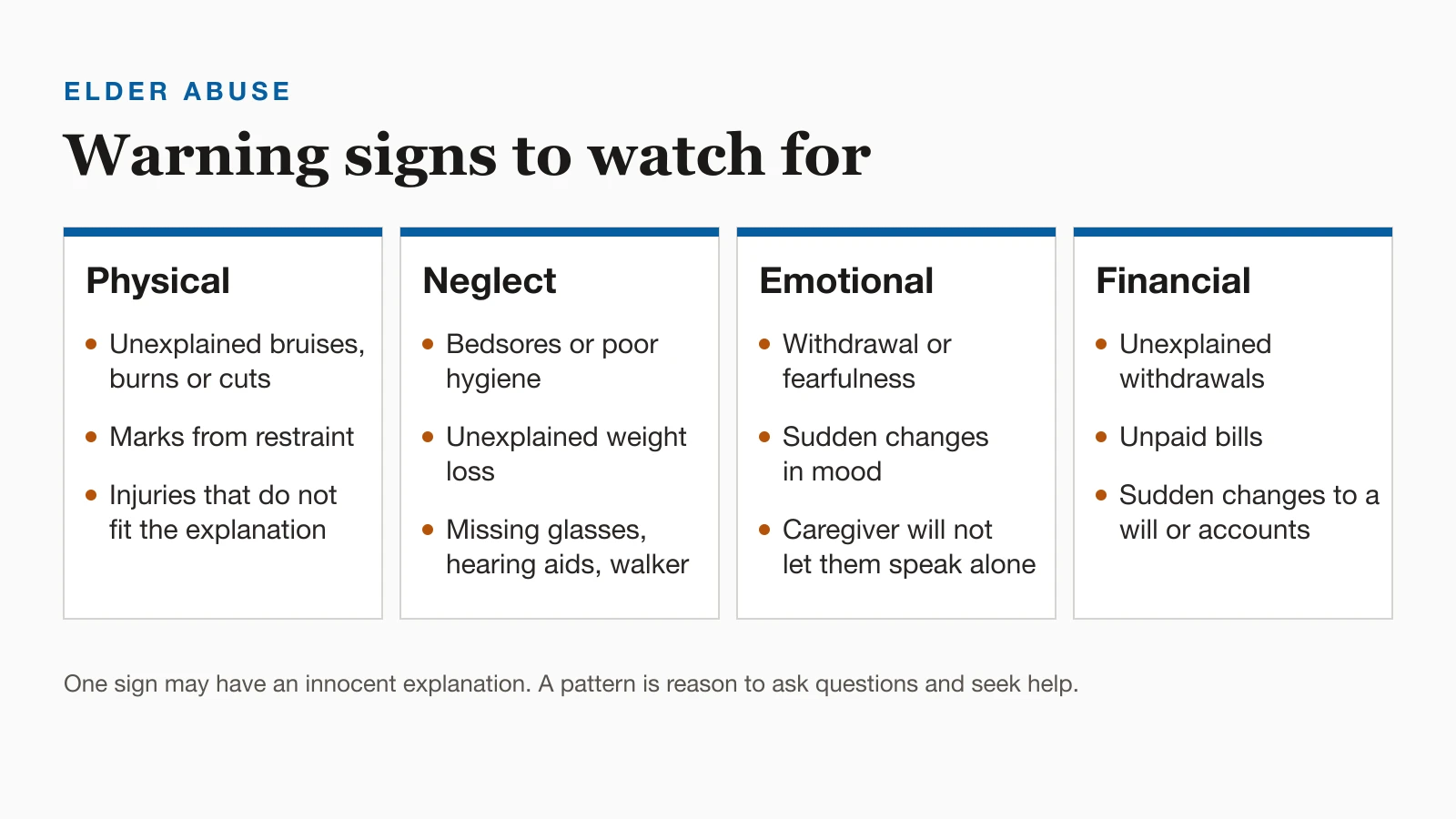
Based on guidance from the National Institute on Aging and the CDC, possible signs include:
Physical signs
- Unexplained bruises, burns, cuts or pressure marks, especially in different stages of healing
- Signs of restraint, such as marks on the wrists
- Frequent falls or injuries with explanations that do not fit
Neglect
- Bedsores (pressure injuries), poor hygiene, dehydration or unexplained weight loss
- Missing glasses, dentures, hearing aids, walkers or other mobility aids
- Unsafe or unsanitary living conditions, missed medications or appointments
Emotional and behavioral signs
- Withdrawal, fearfulness, agitation or unusual changes in mood
- A caregiver who will not let the older adult speak alone with you
Financial signs
- Sudden unexplained withdrawals or unpaid bills despite adequate income
- New names on accounts, or sudden changes to a will, power of attorney or property titles
Any one sign may have an innocent explanation. A pattern, or a gut feeling that something is wrong, is reason enough to ask questions and seek help.
Practical takeaways: prevention
The CDC notes that most elder abuse prevention strategies have not yet been rigorously evaluated, but several practical steps are widely recommended:
- Stay connected. Isolation is a major risk factor. Visit, call and check in on older neighbors and relatives, especially those who live alone.
- Listen and believe. Take an older adult's concerns seriously, and make time to talk with them privately.
- Support caregivers. Caregiving is demanding. Respite care, adult day programs and caregiver training can reduce stress that sometimes contributes to neglect or mistreatment.
- Protect finances. Encourage trusted, transparent money management, such as a financial power of attorney chosen while the person can decide for themselves, and alerts for unusual account activity.
- Stay involved in facility care. Visit at varied times, get to know staff and ask questions about care plans.
- Healthcare teams: learn your facility's reporting procedures. The National Center on Elder Abuse lists validated screening tools for healthcare settings, such as the Elder Abuse Suspicion Index (EASI), and notes that many require training before use.
How to report elder abuse
In California
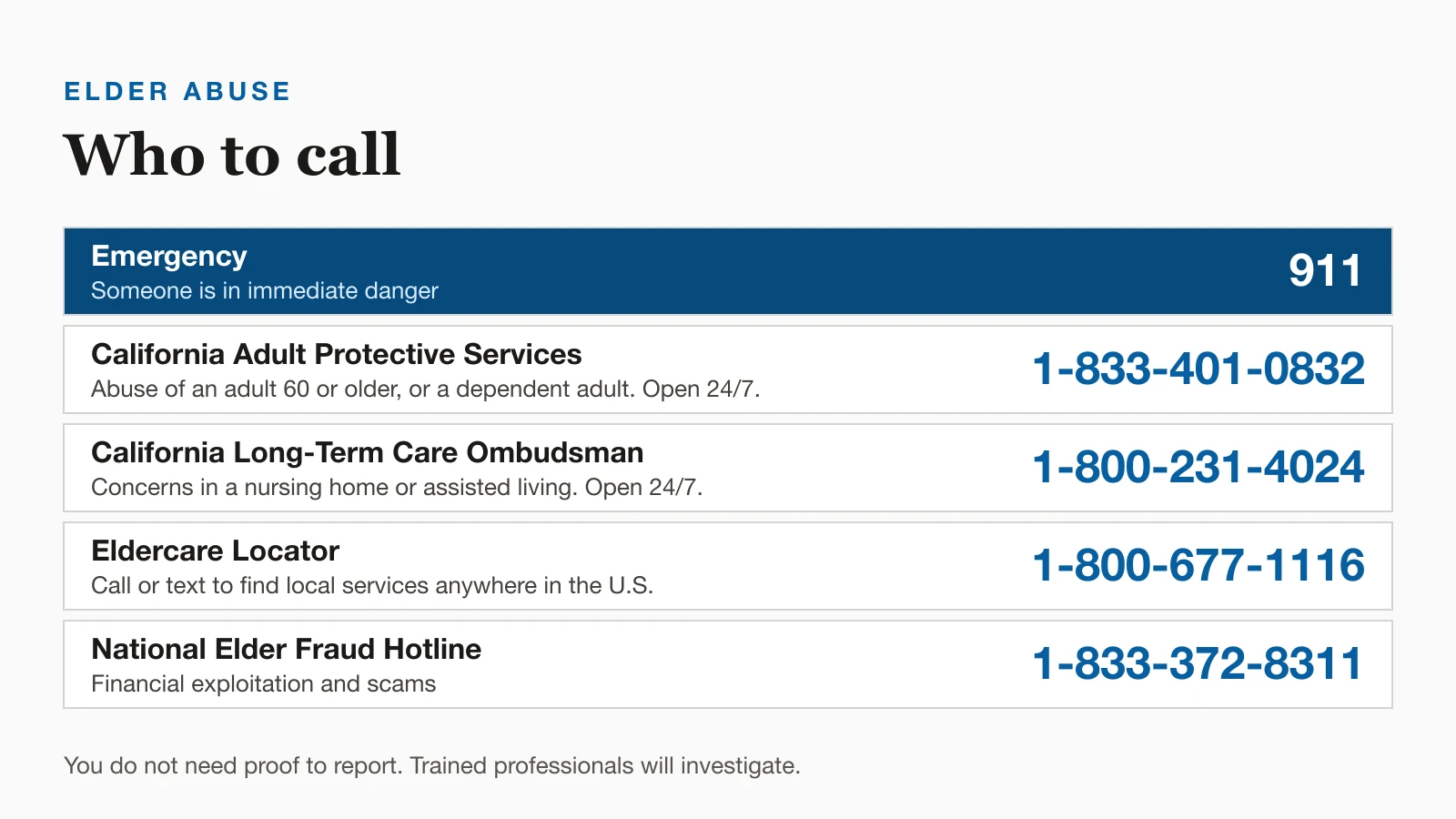
- Adult Protective Services (APS): call 1-833-401-0832, available 24 hours a day, 7 days a week. You will be routed to the APS office for your county. APS serves adults 60 and older and dependent adults 18 to 59, in all 58 counties, at no cost. You can also contact local law enforcement.
- Long-Term Care Ombudsman: for concerns in a nursing home or assisted living facility, call the statewide Ombudsman hotline at 1-800-231-4024, available 24/7, free and confidential.
Anywhere in the U.S.
- Eldercare Locator: call or text 1-800-677-1116 to find local services, including APS, in any community.
- National Elder Fraud Hotline: 1-833-372-8311 for financial exploitation and scams.
For healthcare workers and other mandated reporters in California
Under California Welfare and Institutions Code section 15630, health practitioners and care custodians who observe or suspect abuse of an elder or dependent adult must report it immediately, or as soon as practicably possible, by telephone (or through an approved internet reporting tool), and follow up with a written report within two working days. Outside a long-term care facility, the report generally goes to APS or local law enforcement. The written report form is SOC 341. Facility-based abuse has additional, shorter timelines, so check with your employer's compliance team and the current statute.
When to involve a physical therapist
Physical therapists can be part of the solution. A PT can help an older adult regain strength, balance and mobility so they depend less on others for daily tasks, recommend home safety changes and appropriate equipment, and train family caregivers in safe transfer and handling techniques that lower injury risk for everyone. If a fall or injury does not have a clear explanation, a PT evaluation, along with a physician visit, can also bring another trained set of eyes.
Our community mission
Flexion Foundation is a nonprofit dedicated to sharing evidence-based health education with our community. Protecting older adults and people with disabilities is everyone's responsibility. Please share this article with family members, caregivers and colleagues, and save the APS and Eldercare Locator numbers in your phone. Knowing the signs and how to report could change someone's life.
References
- Yon Y, Mikton CR, Gassoumis ZD, Wilber KH. Elder abuse prevalence in community settings: a systematic review and meta-analysis. Lancet Glob Health. 2017;5(2):e147-e156. doi:10.1016/S2214-109X(17)30006-2.
- Kitaw TA, Baylie A, Tekle BA, et al. Elder abuse without borders: a systematic review and meta-analysis. BMC Public Health. 2025;25:2268. doi:10.1186/s12889-025-23548-9.
- Shen Y, Sun F, Feng Y, et al. Prevalence of elder abuse and neglect of persons with dementia in community settings: a systematic review and meta-analysis. Gerontology. 2025;71(5):400-416. doi:10.1159/000543804.
- Yon Y, Ramiro-Gonzalez M, Mikton CR, et al. The prevalence of elder abuse in institutional settings: a systematic review and meta-analysis. Eur J Public Health. 2019;29(1):58-67. doi:10.1093/eurpub/cky093.
- Makaroun LK, Shin N, Hruska KL, et al. Healthcare clinicians' perspectives on managing suspected elder abuse: “We don't want to just swoop in and do what we think is best.”. Innov Aging. 2025;9(5):igaf012. doi:10.1093/geroni/igaf012.
- Centers for Disease Control and Prevention. About Abuse of Older Persons. Updated November 7, 2024.
- National Institute on Aging. Elder Abuse.
- California Department of Social Services. Adult Protective Services.
- California Department of Aging. Long-Term Care Ombudsman.
- California Legislature. California Welfare and Institutions Code §15630.
- Administration for Community Living. Eldercare Locator.
- National Center on Elder Abuse. Detection and Screening Instruments.
Helpful Resources
- California Department of Aging (opens in a new tab)The state department that administers programs for older adults, adults with disabilities, and family caregivers. Its site can point you to services in your county.
- Family Caregiver Alliance (opens in a new tab)A nonprofit that offers information, education, and support for family members and friends caring for adults with chronic or disabling health conditions.
For more organizations like these, explore our caregiver and family support resources.